

Aluminium Hardware Guide for Selangor Manufacturers – Benefits, Alloys & Fabrication

What is aluminium hardware and why is it important for Selangor manufacturers?
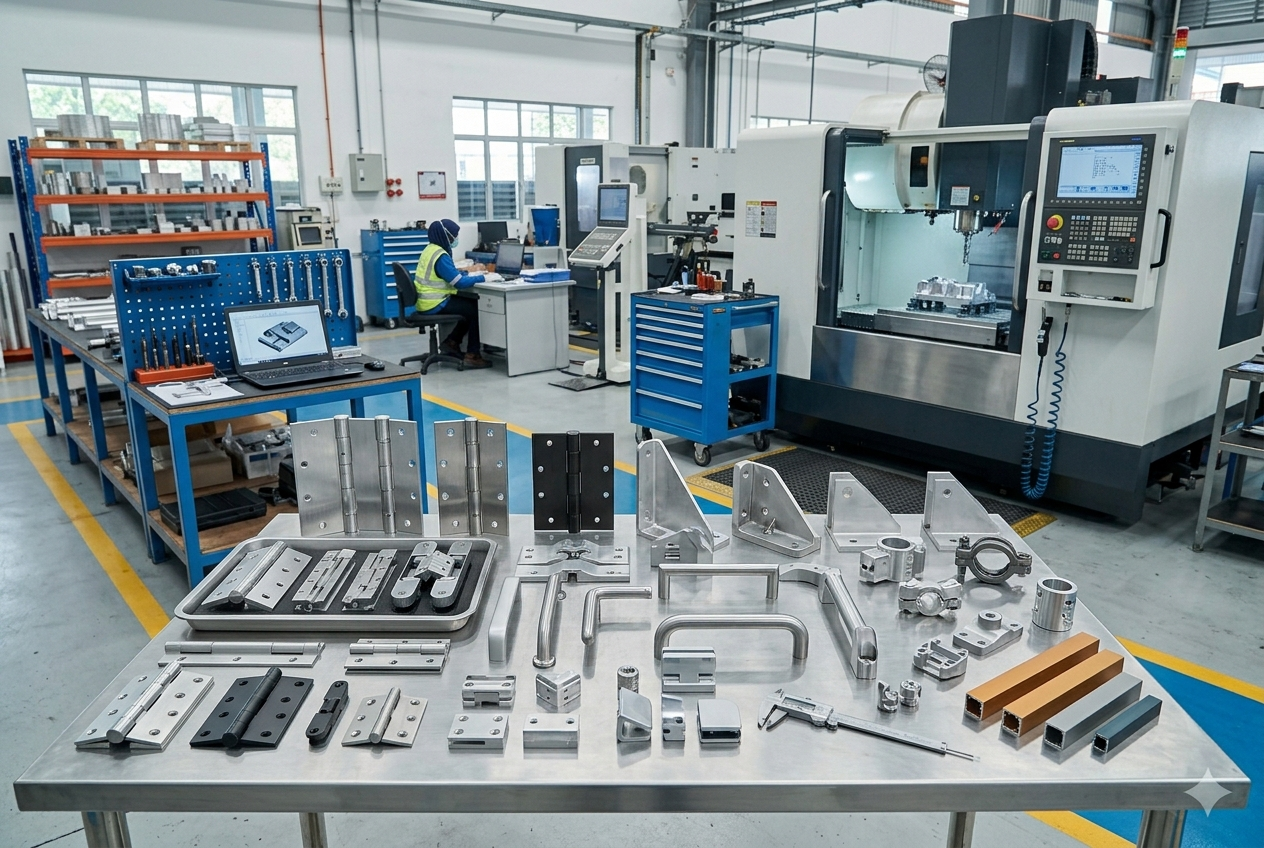
Aluminium hardware comprises fittings, brackets, fasteners and structural components made from aluminium alloys, prized for their lightweight strength, corrosion resistance and ease of fabrication. Selangor manufacturers rely on these parts to reduce product weight, enhance durability and comply with Malaysia’s building and engineering standards.
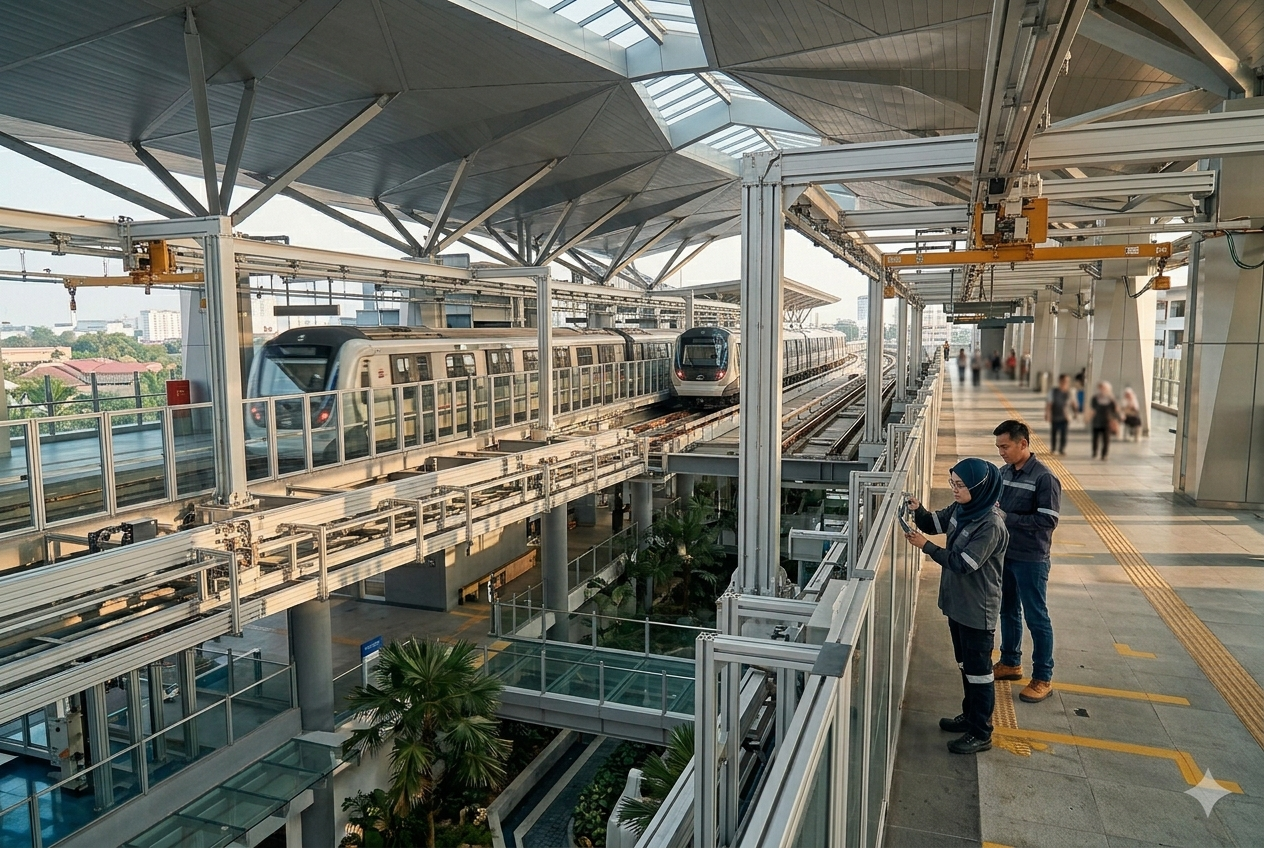
Common applications include machine guards, conveyor brackets, façade supports and transport equipment fittings, where the material’s recyclability also supports green building certifications.
Which aluminium alloys are commonly used in hardware production?
The most frequently used alloys for aluminium hardware in Selangor are 6061-T6 and 6063-T5, selected for their excellent mechanical properties, weldability and surface finish. Alloy 6061 provides higher strength for load-bearing brackets, while 6063 offers superior extrusion quality for decorative fittings, both conforming to MS 144:2019 standards.
Other alloys such as 6082-T6 may be used for specialized high-strength components, but 6061 and 6063 cover the majority of hardware needs in the Klang Valley.
How does the fabrication process for aluminium hardware work?
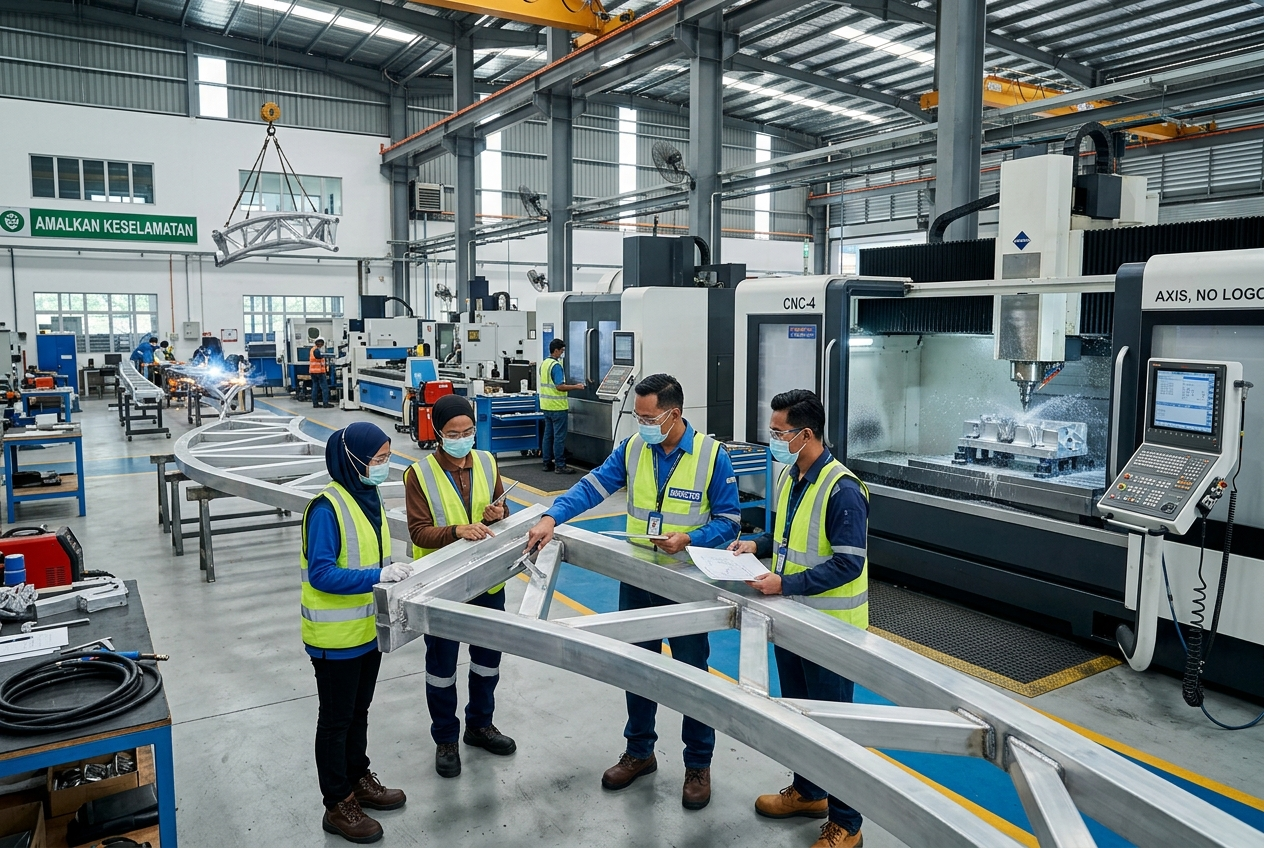
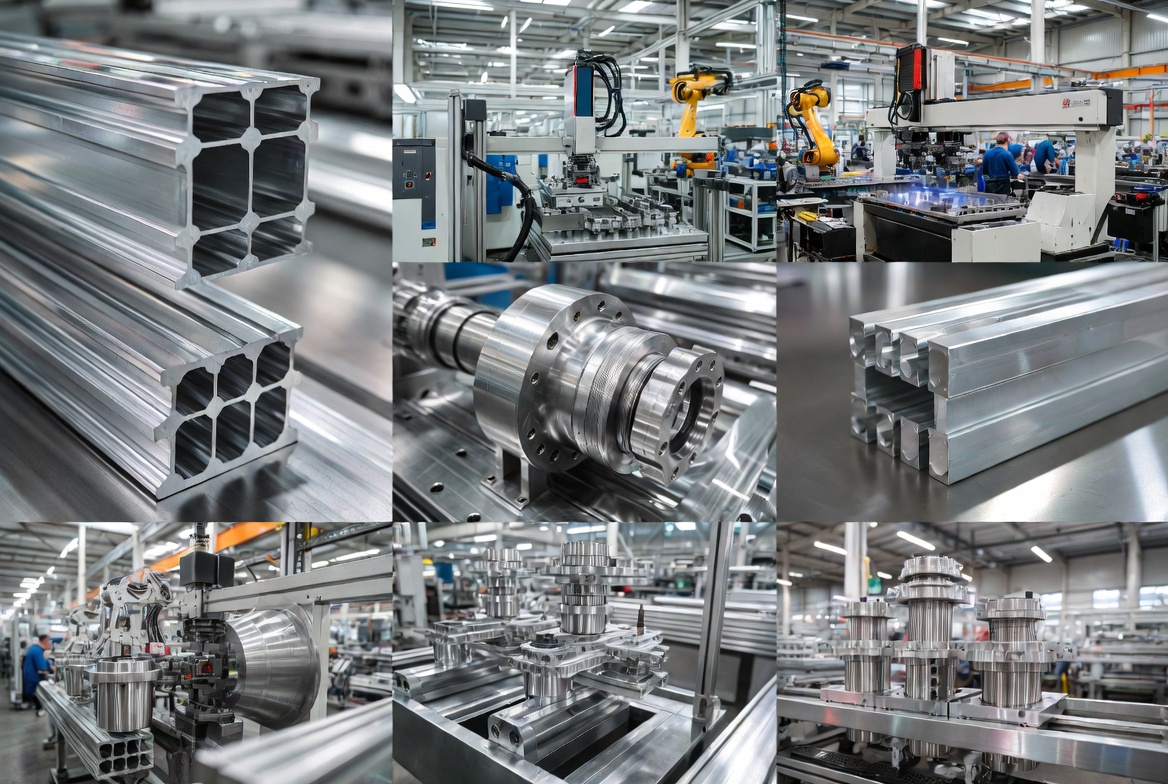
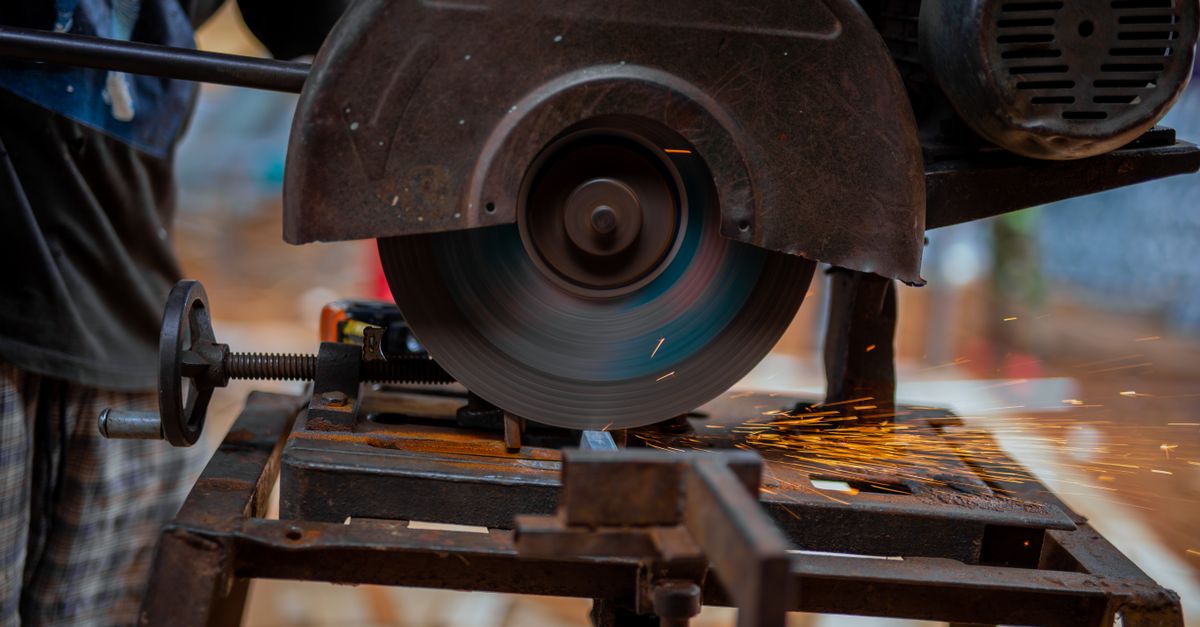
Fabrication starts with cutting extruded aluminium profiles to length using CNC saws, followed by precision machining-drilling, tapping and milling-to create holes and threads. Components are then deburred, surface-treated (anodizing or powder coating) and finally assembled or packaged, achieving tolerances within +/- 0.1 mm and consistent surface quality.
- CNC saw cutting – +/- 0.1 mm length tolerance
- Precision drilling/tapping – hole accuracy +/- 0.05 mm
- Milling – flatness and feature accuracy
- Deburring – removal of sharp edges
- Surface treatment – anodizing (>=12 µm) or powder coating (60-80 µm)
- Final inspection – dimensional and visual check per MS 144:2019
What are the key benefits of using aluminium hardware in construction and industrial applications?
Aluminium hardware delivers a high strength-to-weight ratio, reducing structural load while maintaining robustness. Its natural oxide layer provides excellent corrosion resistance in Selangor’s tropical humidity, and the material is fully recyclable, supporting green building certifications such as GBI and LEED, which lowers lifecycle costs and speeds installation.
Additional benefits include thermal conductivity for heat-sink applications, non-magnetic properties for electronic enclosures, and ease of recycling that reduces waste disposal fees.
How does aluminium hardware improve corrosion resistance in Malaysia’s humid climate?
When exposed to air, aluminium forms a thin, transparent alumina layer that self-heals if scratched, blocking moisture and chloride ingress. In Selangor’s coastal and industrial zones this passive film withstands salt spray and acidic pollutants far better than steel, eliminating frequent protective coatings and extending service life beyond 15 years in typical applications.
The protective film regenerates automatically, ensuring long-term performance even in environments with high humidity and occasional acid rain.
What cost savings can businesses expect from aluminium hardware?
Businesses typically save 10-20% on material costs because aluminium is less expensive per kilogram than stainless steel and requires lighter supporting structures. Fabrication savings arise from shorter machining times and lower tool wear, while reduced maintenance and corrosion-related repairs over five years can cut total ownership costs by up to 30% versus ferrous alternatives.
For a typical 500 kg hardware package, this translates to roughly RM 5,000-RM 10,000 saved in material alone, with additional savings in logistics and installation.
Where can businesses in Selangor source reliable aluminium hardware fabrication services?
Selangor hosts several certified fabricators specializing in aluminium hardware, with Kamco Aluminium noted for its integrated design-to-delivery capabilities. Buyers should verify ISO 9001 certification, in-house CNC machining, and surface-treatment facilities (anodizing, powder coating) to ensure consistent quality and on-time completion within the Klang Valley.
Look for fabricators with a proven track record in local projects, readily available test reports, and a warranty of at least 12 months on workmanship.
What services does Kamco Aluminium offer for aluminium hardware?
Kamco Aluminium provides end-to-end aluminium hardware services, including custom extrusion design, CNC cutting and milling, drilling and tapping, deburring, and surface finishing such as anodizing (clear, coloured, hard coat) and powder coating. The firm also offers assembly, quality inspection per MS 144:2019, and logistics support to Selangor-based clients, with a typical lead time of 2-3 weeks.
- Custom extrusion design – CAD-supported profile development
- CNC cutting – saw and rotary cut to length
- Milling & drilling – precision features
- Deburring – vibratory or manual edge removal
- Anodizing – clear, colour, hard coat (>=12 µm)
- Powder coating – electrostatic application, 60-80 µm
- Assembly – mechanical fastening or welding as required
- Inspection – dimensional, surface, adhesion tests
- Logistics – delivery to Selangor sites
How to evaluate a fabricator’s capabilities and certifications?
Evaluators should confirm ISO 9001:2015 accreditation, request recent test reports for tensile strength and corrosion resistance, and inspect the facility’s CNC machine tolerance (+/- 0.05 mm) and surface-treatment thickness (anodizing >=12 µm). References from Selangor projects and a minimum 12-month warranty further indicate reliability and commitment to quality.
Additional checks: ISO 14001 environmental management, in-house calibration lab, and availability of material traceability certificates (mill test reports).
Frequently Asked Questions (FAQs)
What is aluminium hardware used for in Selangor?
In Selangor, aluminium hardware refers to brackets, fasteners, structural fittings and similar components that support machinery, building facades, transport equipment and other industrial applications. Its lightweight strength and corrosion resistance make it ideal for reducing overall system weight while meeting local engineering standards.
These components are commonly found in machine frames, conveyor systems, and architectural facades across the state.
Which aluminium alloy is best for outdoor hardware?
For outdoor hardware in Selangor’s humid and coastal environments, alloy 6063-T5 is generally preferred because it extrudes smoothly, offers a good surface finish and provides adequate corrosion resistance. When higher load-bearing capacity is required, 6061-T6 is chosen despite a slightly less refined extrusion finish.
Both alloys are stocked locally and extrude to custom profiles quickly.
How does anodizing improve aluminium hardware durability?
Anodizing electrolytically thickens the natural oxide layer on aluminium, creating a hard, wear-resistant surface that enhances protection against corrosion and abrasion. The process also allows colouring for aesthetic purposes while maintaining the metal’s lightweight and recyclable properties. Additionally, the sealed anodic layer improves resistance to UV degradation and chemical exposure, extending service life in tropical conditions.
Can aluminium hardware be recycled after use?
Yes, aluminium is 100% recyclable without any loss of its inherent properties, allowing scrap hardware to be remelted and reused indefinitely. This closed-loop recycling supports Selangor’s circular economy goals and reduces the environmental impact of manufacturing operations. Recycling aluminium saves up to 95% of the energy required to produce primary metal, making it both economically and environmentally advantageous.
What is the typical lead time for custom aluminium hardware from Kamco Aluminium?
Kamco Aluminium normally delivers custom aluminium hardware within 2-3 weeks, depending on design complexity, required surface treatment and current production load. Simple extruded parts with standard anodizing can be completed faster, while complex assemblies with hard-coat anodizing may approach the upper end of that range.
Urgent orders can sometimes be expedited to one week with prior arrangement.
Do I need special tools to install aluminium hardware?
Standard metal-working tools such as drill bits, wrenches and screwdrivers are sufficient for installing aluminium hardware. However, using carbide-tipped or coated bits and applying moderate torque helps prevent surface galling and preserves the finish, especially on anodized or powder-coated components. This practice extends tool life and ensures consistent fastening performance.
How does aluminium hardware compare to stainless steel in cost?
Aluminium hardware generally costs 10-20% less per kilogram than stainless steel, and its lower density reduces shipping weight and the size of supporting structures. When factoring in reduced maintenance, longer corrosion-free life and easier fabrication, total project expenses can be 20-30% lower than comparable stainless-steel solutions.