

Aluminium Extrusion Dies: Design, Manufacturing & Engineering Guide for High-Performance Aluminium Profiles

Introduction
Aluminium extrusion dies are one of the most critical components in the aluminium manufacturing process. They determine the shape, precision, strength, and performance of every aluminium profile used in construction, industrial systems, transportation, electronics, and architectural applications.
Without a properly designed extrusion die, it is impossible to produce consistent, high-quality aluminium profiles. This makes die engineering a core discipline within aluminium manufacturing and a key factor in determining product performance, production efficiency, and overall project success.
In Malaysia and global manufacturing hubs, aluminium extrusion dies are essential for producing standard profiles, structural components, and fully custom-engineered aluminium solutions.
This article provides a complete guide to aluminium extrusion dies, including design principles, manufacturing processes, types, materials, applications, maintenance, and their role in modern aluminium engineering.
What Are Aluminium Extrusion Dies?
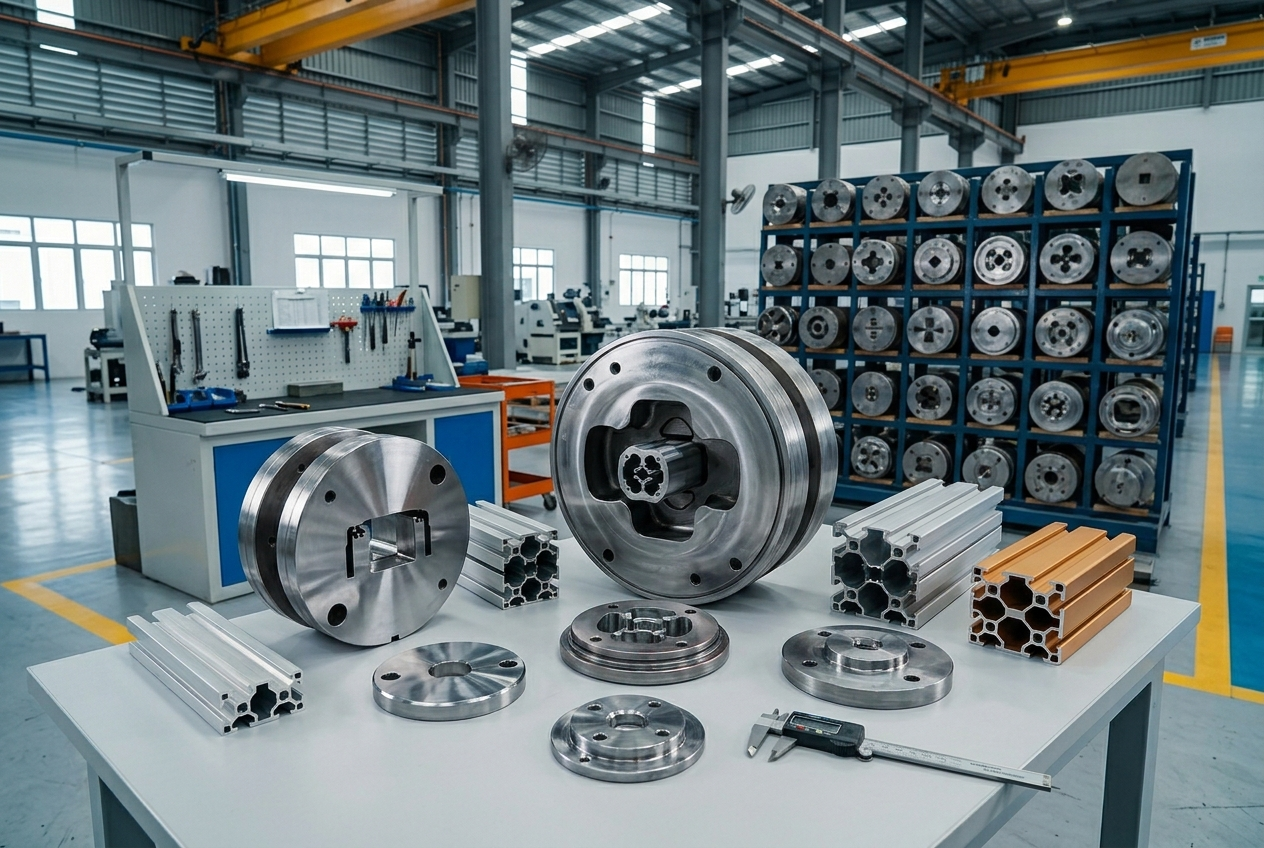
Aluminium extrusion dies are precision-engineered steel tools used in the extrusion process to shape heated aluminium billets into specific cross-sectional profiles.
During extrusion, aluminium is forced under high pressure through the die opening, forming continuous lengths of aluminium profiles.
The die essentially acts as a mold that defines:
- Shape of the profile
- Wall thickness
- Structural geometry
- Surface characteristics
- Functional features
Every aluminium profile—whether simple or complex—requires a dedicated die design.
Importance of Extrusion Dies in Aluminium Manufacturing
Extrusion dies directly impact:
Product Quality
A well-designed die ensures:
- Accurate dimensions
- Smooth surface finish
- Structural consistency
- Minimal defects
Production Efficiency
Optimized dies reduce:
- Material waste
- Production time
- Machine load
- Operational costs
Engineering Performance
Die design affects:
- Strength of the profile
- Load distribution
- Thermal behavior
- Assembly compatibility
Design Flexibility
Extrusion dies enable the creation of:
- Custom profiles
- Complex geometries
- Multi-functional components
- Integrated structural systems
Types of Aluminium Extrusion Dies
Solid Dies
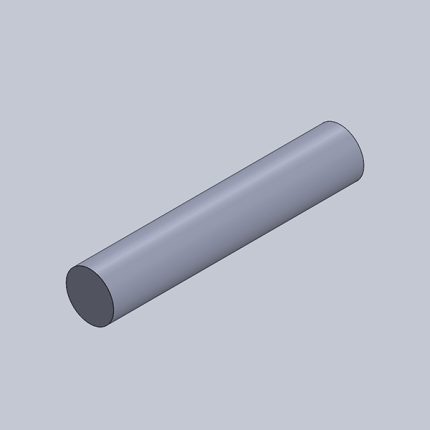
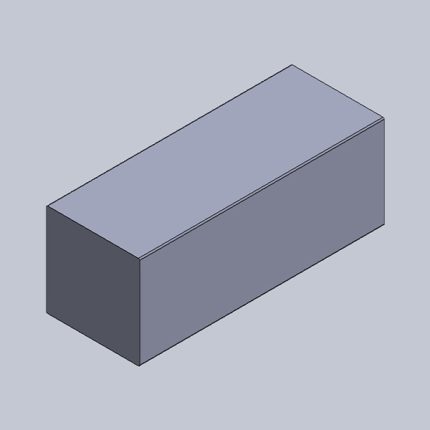
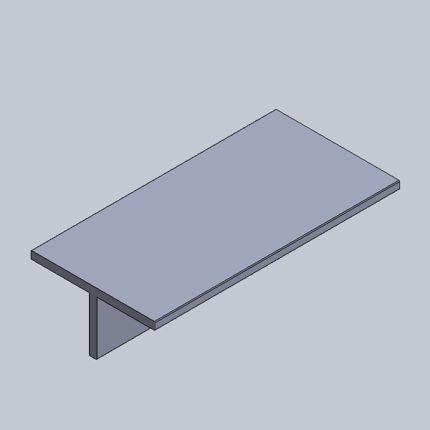
Solid dies are used to produce non-hollow aluminium profiles.
Common applications include:
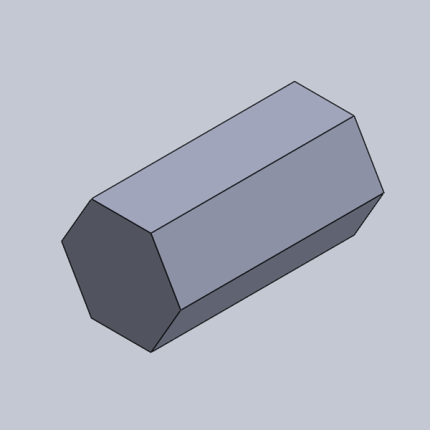
- Bars
- Rods
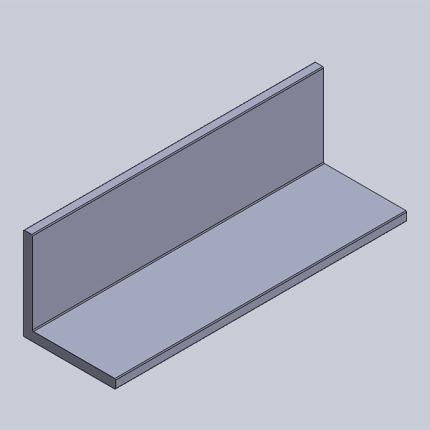
- Angles
- Flat sections
- Simple structural shapes
They are easier to design and manufacture.
Hollow Dies
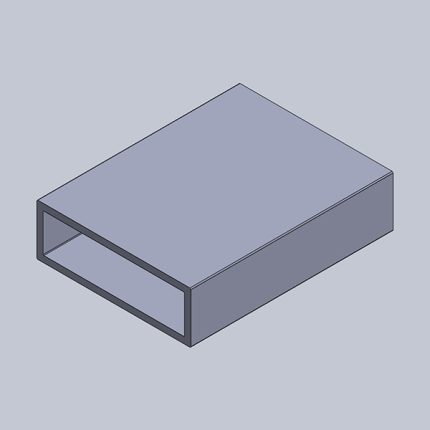
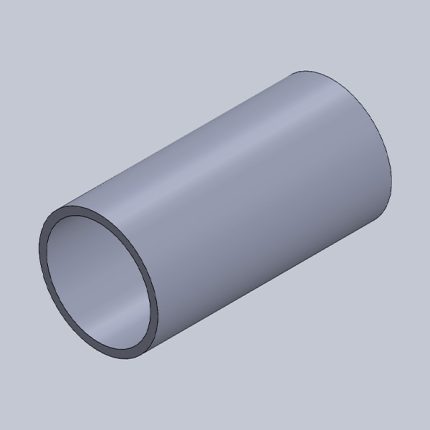
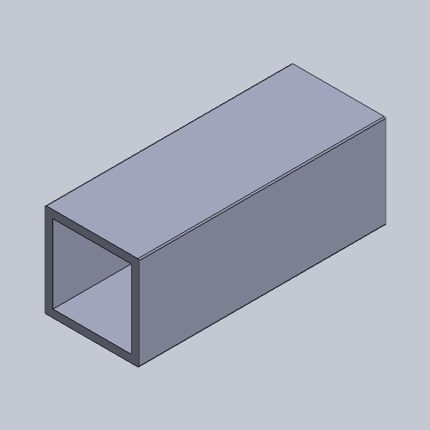
Hollow dies are used for profiles with internal cavities.
Applications include:
- Tubes
- Multi-chamber profiles
- Structural frames
- Architectural systems
These dies require more advanced engineering due to internal flow control.
Semi-Hollow Dies
Semi-hollow dies are used when profiles have partially enclosed cavities.
They balance complexity and production efficiency.
Custom Engineering Dies
Custom dies are designed for specific industrial or architectural applications.
They are widely used in:
- Construction systems
- Transportation infrastructure
- Industrial machinery
- High-performance engineering projects
Custom dies enable innovation in aluminium profile design.
Aluminium Extrusion Die Design Process
1. Requirement Analysis
Engineers begin by analyzing:
- Application requirements
- Load-bearing conditions
- Material specifications
- Thermal conditions
- Aesthetic requirements
This ensures the die matches functional expectations.
2. CAD Design & Simulation
Modern die design uses advanced CAD software to simulate:
- Material flow
- Stress distribution
- Temperature effects
- Extrusion speed
Simulation reduces design errors before manufacturing.
3. Flow Optimization
Aluminium must flow evenly through the die to prevent defects such as:
- Warping
- Cracking
- Uneven thickness
Engineers optimize flow channels to ensure consistency.
4. Die Fabrication
Dies are manufactured using high-strength tool steel.
Manufacturing processes include:
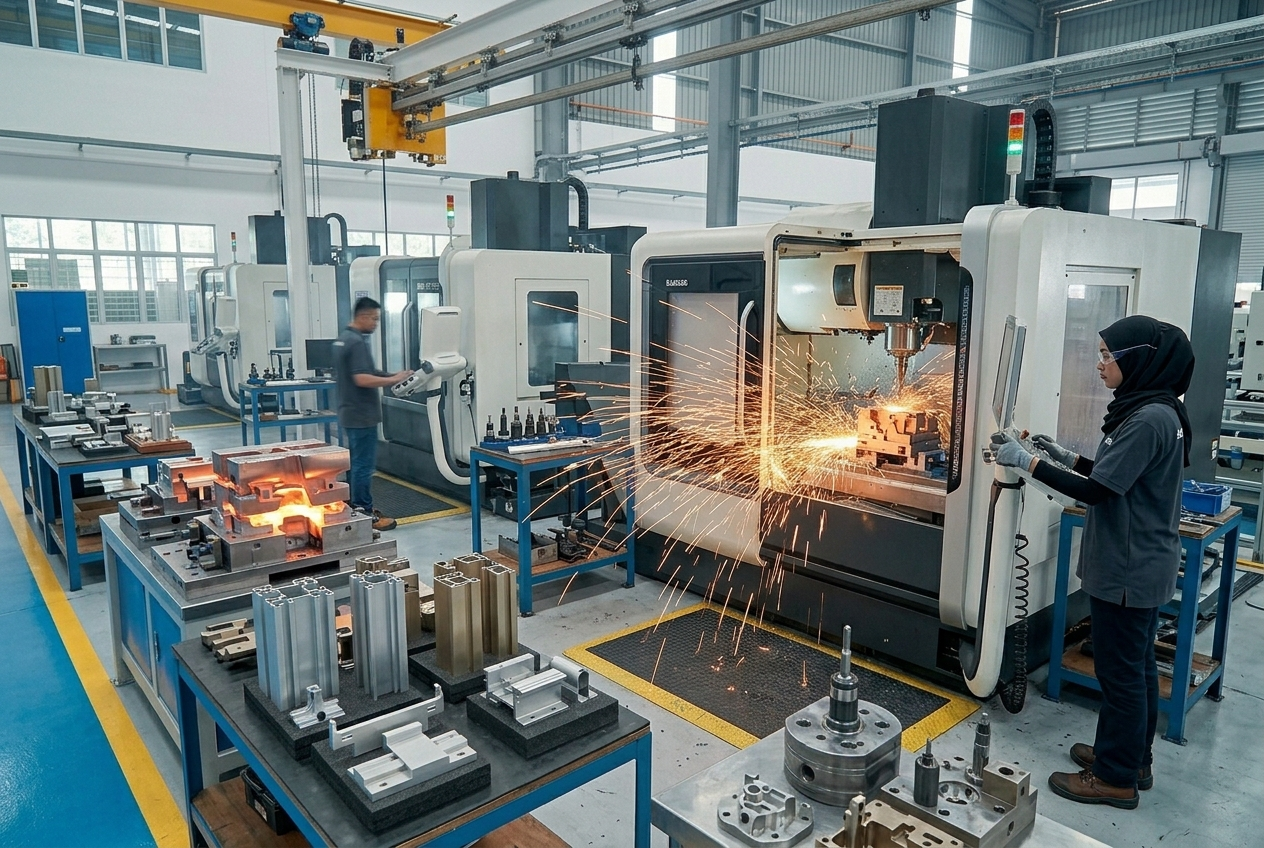
- CNC machining
- Wire EDM (Electrical Discharge Machining)
- Heat treatment
- Surface polishing
Precision is critical at every stage.
5. Heat Treatment
Dies undergo heat treatment to improve:
- Hardness
- Wear resistance
- Structural stability
This ensures long service life under high-pressure conditions.
6. Final Polishing & Testing
Before use, dies are:
- Polished for smooth flow
- Tested for accuracy
- Verified for dimensional tolerance
Materials Used for Extrusion Dies
Tool Steel (H13 Grade)
Most commonly used due to:
- High heat resistance
- Strong wear resistance
- Excellent durability
Alloy Tool Steel
Used for specialized applications requiring:
- Enhanced toughness
- Improved fatigue resistance
Surface Coatings
Some dies are coated with:
- Nitriding layers
- Anti-wear coatings
- Thermal protection layers
These extend die lifespan.
How Aluminium Extrusion Works Using Dies
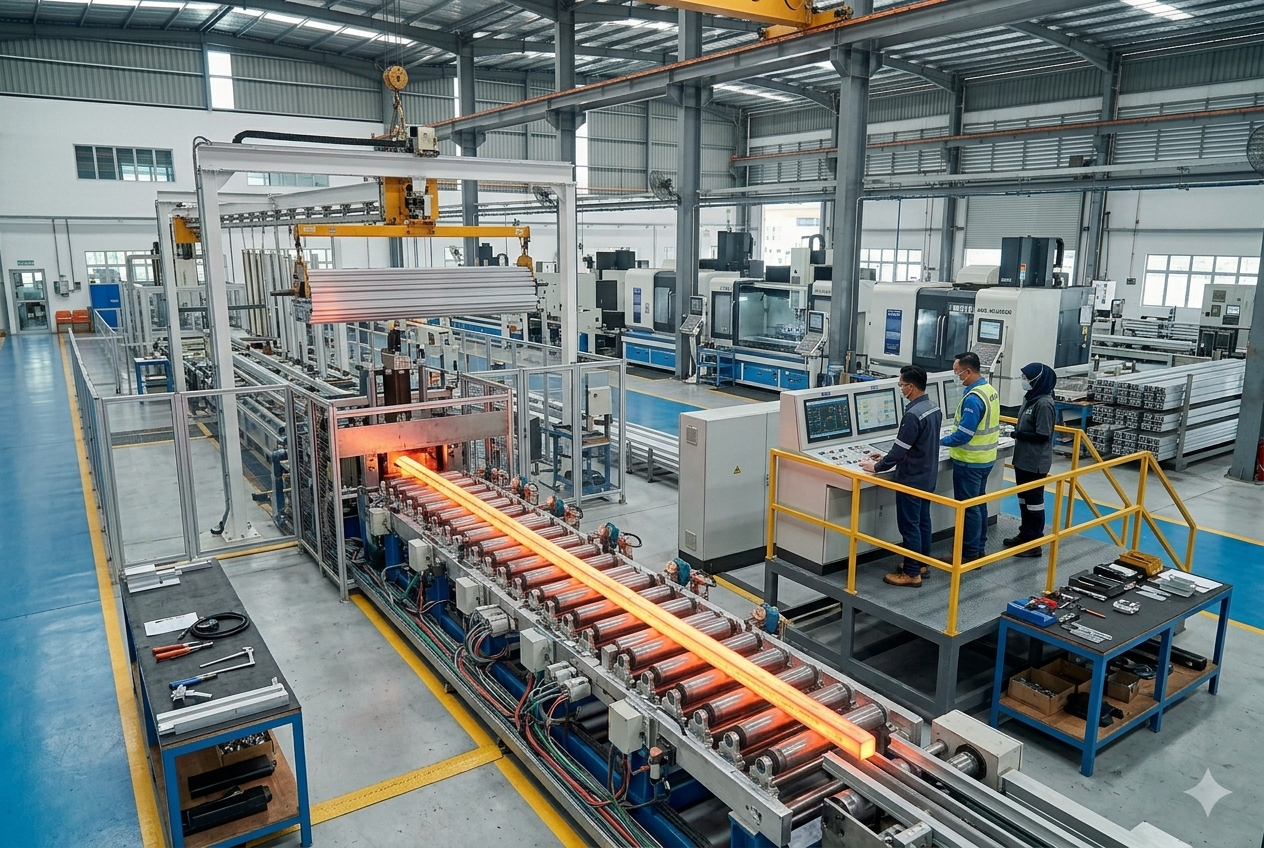
Step 1: Heating Aluminium Billets
Aluminium is heated to a malleable temperature.
Step 2: Applying Pressure
A hydraulic press forces aluminium through the die.
Step 3: Profile Formation
The aluminium takes the shape of the die opening.
Step 4: Cooling Process
Extruded profiles are cooled to stabilize structure.
Step 5: Cutting to Length
Profiles are cut according to required dimensions.
Applications of Extrusion Dies
Construction Industry
Used for producing:
- Window frames
- Curtain wall systems
- Door systems
- Facade structures
Industrial Manufacturing
Dies are used to create:
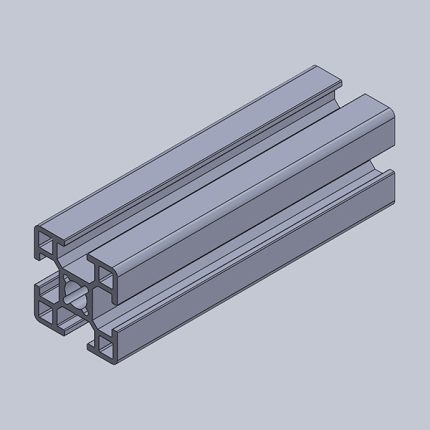
- Machine frames
- Conveyor systems
- Structural supports
- Automation systems
Transportation Systems
Applications include:
- Railway components
- Automotive structures
- Aerospace parts
- Bus frameworks
Electronics Industry
Used for:
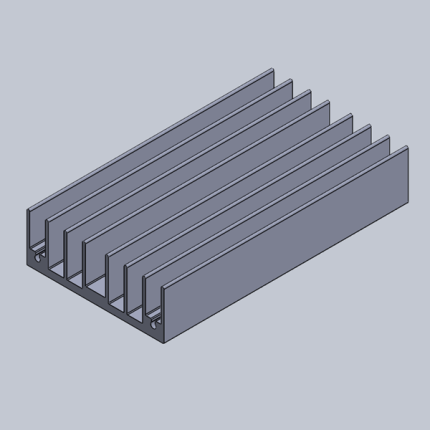
- Heat sinks
- Enclosures
- LED housings
- Cooling systems
Renewable Energy
Used in:
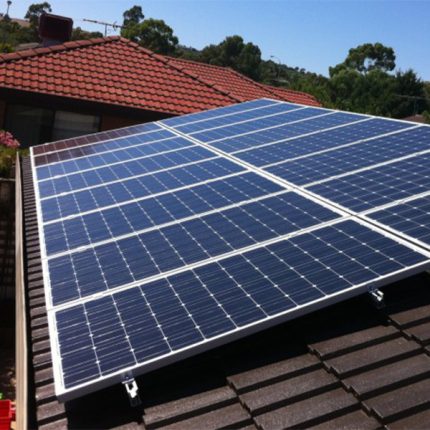
- Solar panel mounting systems
- Wind energy structures
- Battery enclosures
Benefits of High-Quality Aluminium Extrusion Dies
Precision Manufacturing
Ensures consistent and accurate aluminium profiles.
High Production Efficiency
Reduces waste and improves production speed.
Design Flexibility
Allows complex and customized profile designs.
Cost Efficiency
Reduces rework, defects, and material loss.
Long Service Life
Properly engineered dies can withstand thousands of production cycles.
Common Challenges in Die Design
Material Flow Imbalance
Uneven flow can cause distortion in profiles.
Die Wear
Continuous extrusion causes gradual wear over time.
Thermal Stress
High temperatures may affect die stability.
Complex Geometry Design
Intricate profiles require advanced engineering solutions.
Maintenance of Aluminium Extrusion Dies
Proper maintenance extends die lifespan and ensures consistent quality.
Regular Cleaning
Removes aluminium residue buildup.
Inspection
Checks for wear, cracks, and deformation.
Polishing
Restores smooth material flow surfaces.
Repair & Reconditioning
Damaged dies can often be repaired for continued use.
Aluminium Extrusion Dies in Modern Manufacturing
Modern manufacturing increasingly relies on advanced die engineering technologies such as:
- AI-assisted design optimization
- 3D simulation modeling
- Precision CNC machining
- Automated quality inspection
These innovations improve production efficiency and product consistency.
Why Aluminium Extrusion Dies Matter in Engineering
Extrusion dies are the foundation of aluminium profile manufacturing. Every structural system, architectural frame, or industrial component begins with a precisely engineered die.
Their importance includes:
- Defining product performance
- Enabling custom engineering solutions
- Improving manufacturing efficiency
- Supporting large-scale production
- Ensuring quality consistency
Without high-quality dies, modern aluminium engineering would not be possible at scale.
Frequently Asked Questions
What is an aluminium extrusion die?
An aluminium extrusion die is a precision tool used to shape aluminium into specific profiles during the extrusion process.
What are extrusion dies made of?
They are typically made from hardened tool steel such as H13 steel.
Why are extrusion dies important?
They determine the shape, quality, and performance of aluminium profiles.
Can extrusion dies be customized?
Yes. Custom dies are designed for specific engineering and architectural requirements.
How long does an extrusion die last?
A high-quality die can last for thousands of extrusion cycles depending on usage and maintenance.
What industries use extrusion dies?
Construction, manufacturing, transportation, electronics, and energy industries rely on aluminium extrusion dies.
Conclusion
Aluminium extrusion dies are a fundamental component of modern aluminium manufacturing. They enable the production of precise, high-quality aluminium profiles used across a wide range of industries.
From architectural systems and industrial machinery to transportation infrastructure and renewable energy applications, extrusion dies make it possible to create customized aluminium solutions that meet complex engineering demands.
As manufacturing technology continues to advance, extrusion die design and engineering will become even more sophisticated, enabling greater efficiency, precision, and innovation in aluminium production.
For companies involved in aluminium engineering and fabrication, investing in high-quality die design and manufacturing is essential to achieving long-term success, product reliability, and competitive advantage.