

Aluminium Finishing & Aluminium Anodizing Malaysia: The Complete Guide to Durable, High-Performance Aluminium Surface Treatment

Introduction
Aluminium has become one of the most widely used materials in modern architecture, manufacturing, transportation, electronics, and industrial engineering. Its lightweight strength, corrosion resistance, and versatility make it an ideal choice for countless applications. However, to maximize performance, appearance, and longevity, aluminium often requires specialized surface treatment processes.
Among the most important surface enhancement methods are aluminium finishing and aluminium anodizing. These processes not only improve the appearance of aluminium products but also significantly enhance corrosion resistance, wear resistance, durability, and long-term performance.
From architectural facades and commercial buildings to industrial machinery and precision components, aluminium finishing plays a critical role in protecting investments and ensuring products maintain their functionality and visual appeal for years.
This comprehensive guide explores everything businesses need to know about aluminium finishing, aluminium anodizing, their benefits, applications, processes, and why they are essential for modern engineering and manufacturing projects.
What Is Aluminium Finishing?
Aluminium finishing refers to the various surface treatment processes applied to aluminium products after fabrication or manufacturing. These treatments improve appearance, durability, corrosion resistance, and performance characteristics.
Aluminium finishing is commonly used for:
- Architectural Aluminium Systems
- Building Facades
- Aluminium Doors & Windows
- Industrial Equipment
- Automotive Components
- Electronic Enclosures
- Transportation Infrastructure
- Consumer Products
The primary goal of aluminium finishing is to protect the surface while enhancing aesthetics and functionality.
Why Aluminium Finishing Is Important
Although aluminium naturally forms a protective oxide layer when exposed to air, additional finishing treatments offer significantly greater protection and performance.
Benefits include:
- Enhanced Corrosion Resistance
- Improved Surface Hardness
- Better Wear Resistance
- Extended Product Lifespan
- Superior Appearance
- Easier Maintenance
- Improved UV Resistance
- Increased Product Value
For projects exposed to harsh weather conditions, industrial environments, or frequent handling, proper finishing is essential.
What Is Aluminium Anodizing?
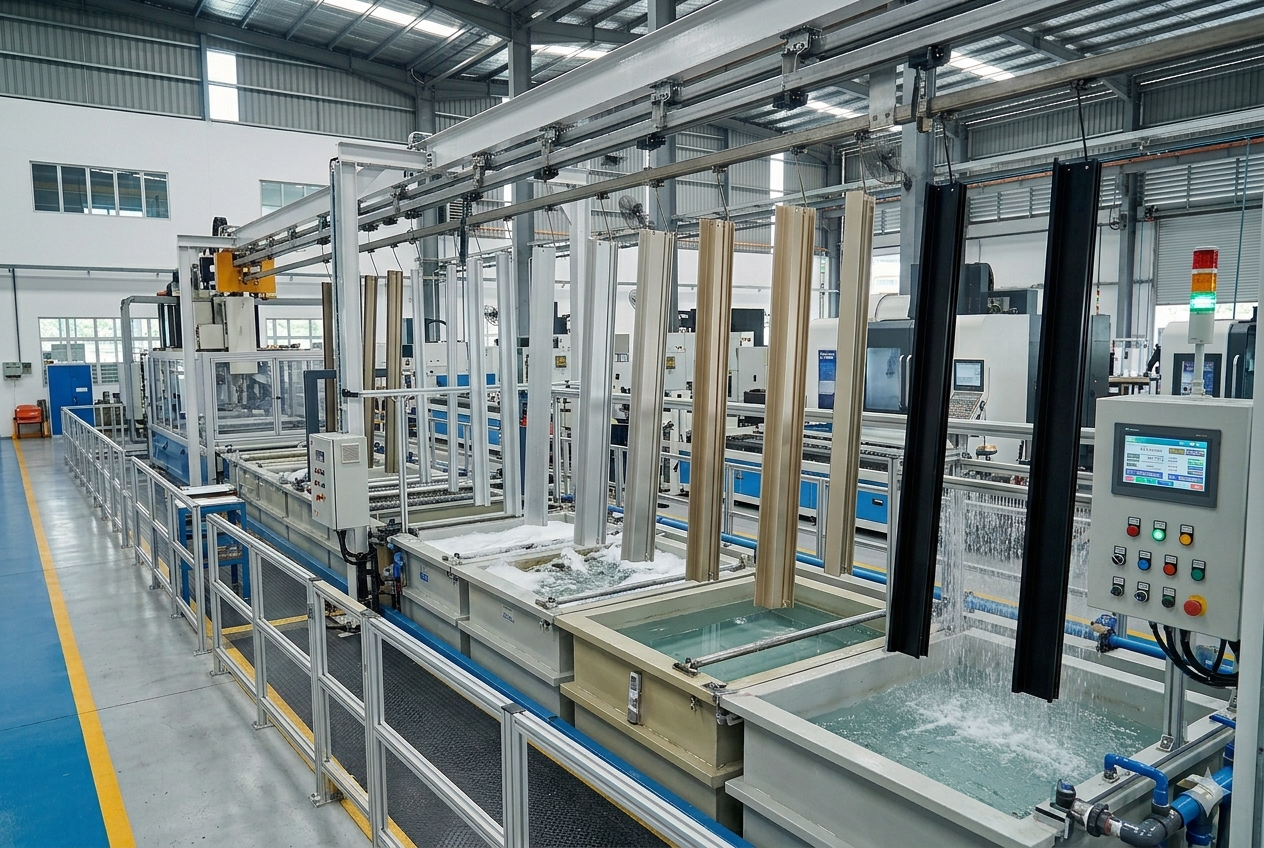
Aluminium anodizing is an electrochemical finishing process that enhances the natural oxide layer on aluminium surfaces.
Unlike paint or coatings that sit on top of the metal, anodizing becomes an integral part of the aluminium itself. This creates an exceptionally durable and long-lasting surface.
The anodizing process converts the aluminium surface into a thick, controlled oxide layer that provides superior protection against environmental factors.
Because the anodized layer is part of the metal, it does not peel, chip, crack, or flake like traditional coatings.
How Aluminium Anodizing Works
The anodizing process involves several carefully controlled stages.
Surface Preparation
The aluminium is thoroughly cleaned to remove:
- Oil
- Dirt
- Grease
- Oxidation
- Manufacturing Residues
Proper preparation ensures consistent anodizing quality.
Etching Process
The surface may be chemically etched to create a uniform appearance and remove minor imperfections.
This step helps achieve the desired finish quality.
Anodizing Bath
The aluminium component is immersed in an electrolyte solution while electrical current passes through the metal.
This controlled electrochemical reaction forms a thick oxide layer on the surface.
The thickness of the anodized layer can be adjusted depending on application requirements.
Coloring Process
When decorative finishes are required, coloring can be introduced after anodizing.
Common anodized colours include:
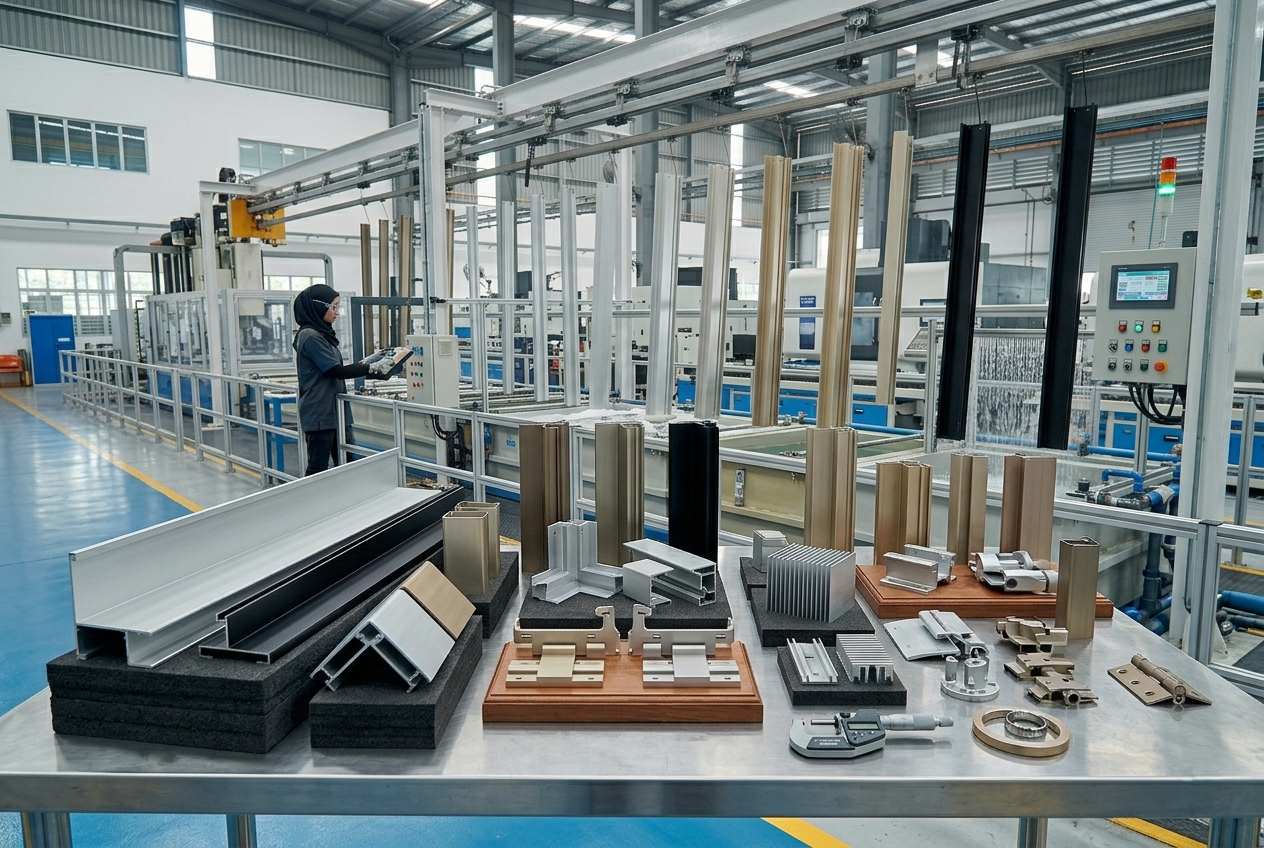
- Natural Silver
- Black
- Bronze
- Gold
- Champagne
- Dark Bronze
These colours become part of the anodized layer rather than simply covering the surface.
Sealing Process
The final sealing stage closes microscopic pores in the anodized layer.
This improves:
- Corrosion Resistance
- Colour Stability
- Durability
- Weather Resistance
The sealing process is critical for long-term performance.
Key Benefits of Aluminium Anodizing
Outstanding Corrosion Resistance
Malaysia’s tropical climate presents significant challenges for construction materials.
Anodized aluminium performs exceptionally well in:
- Coastal Areas
- High Humidity Environments
- Industrial Zones
- Outdoor Installations
The enhanced oxide layer protects against corrosion and environmental degradation.
Exceptional Durability
Anodized surfaces are significantly harder than untreated aluminium.
This improved hardness helps resist:
- Scratches
- Abrasion
- Surface Wear
- Impact Damage
As a result, anodized products maintain their appearance longer.
UV Resistance
Unlike painted surfaces that may fade over time, anodized finishes provide excellent resistance to ultraviolet exposure.
This makes anodized aluminium ideal for:
- Building Exteriors
- Signage
- Outdoor Structures
- Transportation Infrastructure
Colour consistency is maintained even after years of exposure.
Low Maintenance Requirements
Anodized aluminium requires minimal maintenance compared to many alternative finishing methods.
Routine cleaning is generally sufficient to maintain appearance and performance.
This reduces long-term operating costs for building owners and facility managers.
Environmentally Friendly
Anodizing is considered one of the most sustainable aluminium finishing methods.
Advantages include:
- Non-toxic Surface
- Long Service Life
- Recyclability
- Reduced Material Waste
These benefits support modern sustainability objectives.
Types of Aluminium Finishing
Anodizing
The most widely recognized aluminium finishing method.
Ideal for:
- Architectural Applications
- Commercial Buildings
- Transportation Systems
- Industrial Components
Provides excellent durability and appearance.
Powder Coating
Powder coating applies a dry powder finish that is cured under heat.
Benefits include:
- Wide Colour Selection
- Excellent Weather Resistance
- Decorative Flexibility
- Additional Protection
Powder coating is commonly used for architectural and industrial applications.
Mechanical Finishing
Mechanical finishing improves surface appearance through:
- Brushing
- Polishing
- Buffing
- Sanding
Often used to achieve decorative or premium finishes.
Chemical Finishing
Chemical treatments alter the aluminium surface to improve specific performance characteristics.
Applications vary depending on industry requirements.
Applications of Aluminium Anodizing
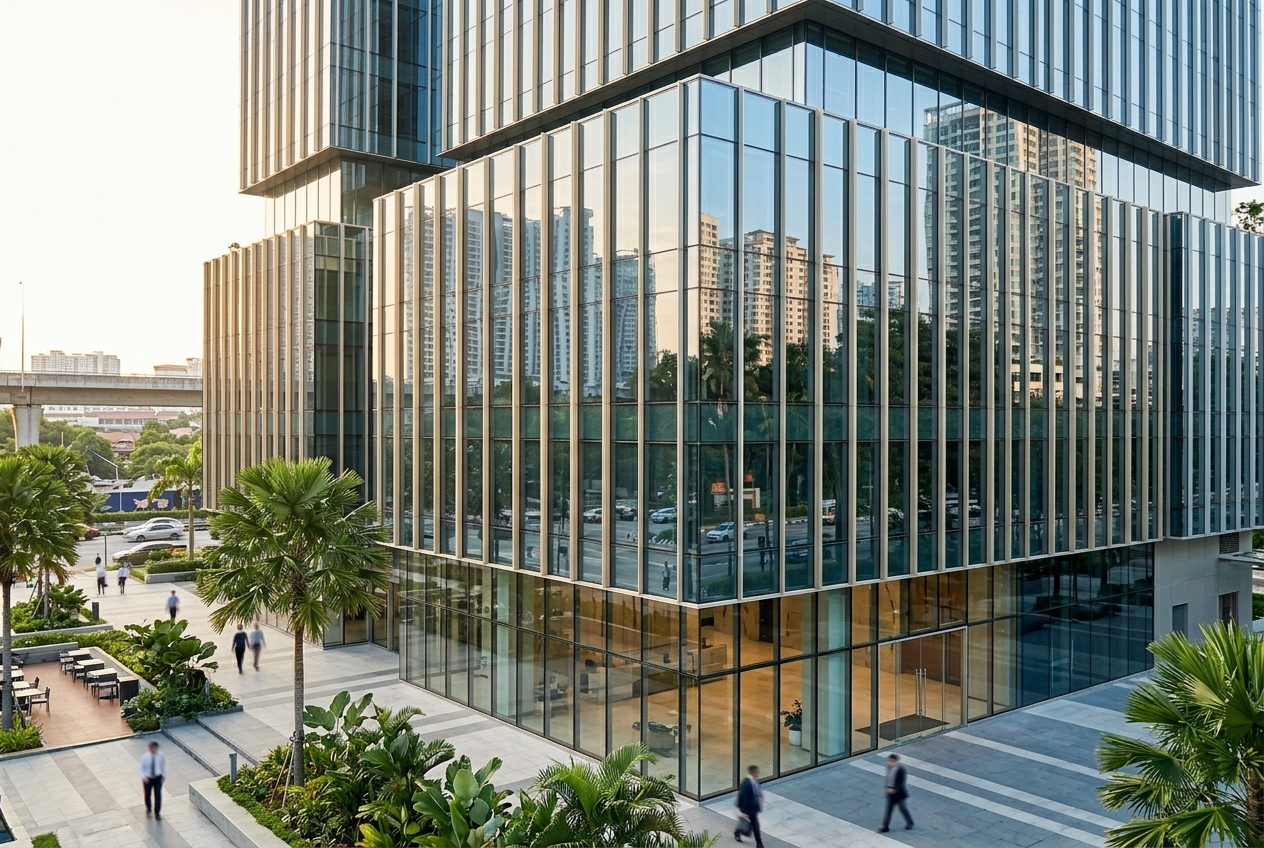
Architectural Aluminium Systems
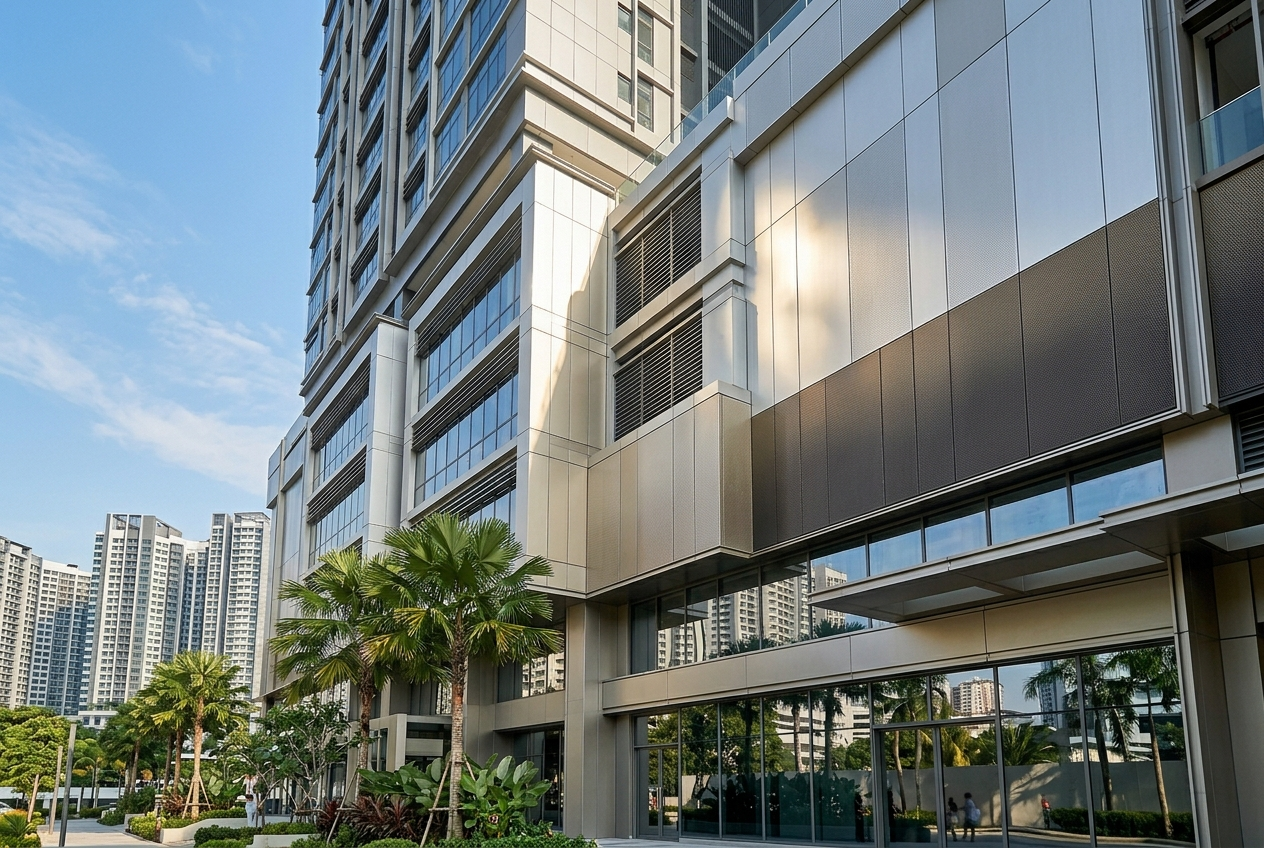
Anodized aluminium is widely used in modern architecture.
Applications include:
- Curtain Walls
- Building Facades
- Louvres
- Window Frames
- Door Systems
- Decorative Features
Architects appreciate its combination of aesthetics and durability.
Commercial Buildings
Commercial developments rely on anodized aluminium because of its professional appearance and low maintenance requirements.
Benefits include:
- Long-Term Value
- Weather Resistance
- Consistent Appearance
- Reduced Maintenance Costs
Industrial Equipment
Industrial environments often expose equipment to harsh conditions.
Anodized components provide:
- Corrosion Protection
- Wear Resistance
- Extended Service Life
Common applications include machinery, enclosures, and production systems.
Transportation Infrastructure
Infrastructure projects utilize anodized aluminium for:
- MRT Systems
- LRT Stations
- Railway Facilities
- Sound Barriers
- Public Structures
The material performs exceptionally well in outdoor environments.
Electronics Industry
Anodized aluminium is frequently used in:
- Electronic Enclosures
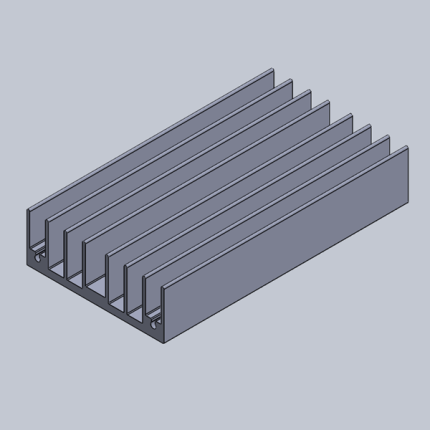
- Heat Sinks
- Control Panels
- Precision Components
The process improves both appearance and durability.
Why Architects Prefer Anodized Aluminium
Architectural projects demand materials that combine performance and aesthetics.
Anodized aluminium offers:
Elegant Appearance
The finish creates a sophisticated metallic appearance suitable for modern building designs.
Consistent Colour
Proper anodizing ensures colour uniformity across large installations.
Long-Term Durability
Buildings benefit from decades of reliable performance with minimal maintenance.
Sustainability
Green building initiatives increasingly favour recyclable and environmentally friendly materials.
Aluminium Finishing for Industrial Applications
Industrial facilities require materials capable of withstanding challenging operating conditions.
Anodized aluminium helps:
- Reduce Corrosion
- Improve Equipment Lifespan
- Lower Maintenance Costs
- Enhance Operational Reliability
This makes it an excellent choice for manufacturing and engineering applications.
Frequently Asked Questions
What is aluminium finishing?
Aluminium finishing refers to surface treatment processes that improve the appearance, durability, corrosion resistance, and performance of aluminium products.
What is aluminium anodizing?
Aluminium anodizing is an electrochemical process that thickens the natural oxide layer on aluminium surfaces to improve protection and durability.
Is anodizing better than painting?
For many applications, anodizing offers superior durability, corrosion resistance, and long-term performance because the finish becomes part of the aluminium itself.
How long does anodized aluminium last?
Properly anodized aluminium can maintain its performance and appearance for decades, even in demanding environments.
Can anodized aluminium be used outdoors?
Yes. Anodized aluminium is highly suitable for outdoor applications because of its excellent weather and UV resistance.
What colours are available for anodized aluminium?
Common colours include silver, black, bronze, gold, champagne, and various custom architectural finishes.
Is anodizing environmentally friendly?
Yes. Anodizing is considered one of the most sustainable aluminium finishing methods due to its durability, recyclability, and low environmental impact.
Why Aluminium Finishing Matters
Aluminium finishing and anodizing are critical investments that significantly improve the performance, appearance, and lifespan of aluminium products.
Whether used in architecture, manufacturing, transportation, infrastructure, or industrial engineering, properly finished aluminium delivers superior value through enhanced durability, reduced maintenance, and long-term reliability.
As industries continue prioritizing sustainability, efficiency, and lifecycle performance, aluminium anodizing remains one of the most trusted and effective finishing solutions available.
Organizations seeking durable, attractive, and environmentally responsible aluminium products can benefit greatly from professional aluminium finishing and anodizing services that ensure maximum performance for years to come.