




Aluminium Extrusion Moulds Guide for Selangor Manufacturers


Aluminium Extrusion Moulds Guide for Selangor Manufacturers
What is an aluminium extrusion mould and how does it work?
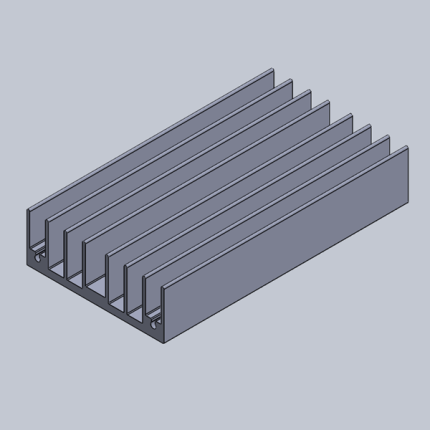
An aluminium extrusion mould is a precision‑engineered die that forces heated aluminium alloy through a shaped opening to produce continuous profiles with consistent cross‑section, surface finish, and tight tolerances. The mould defines the shape of products such as window frames, heat sinks, and automotive parts.
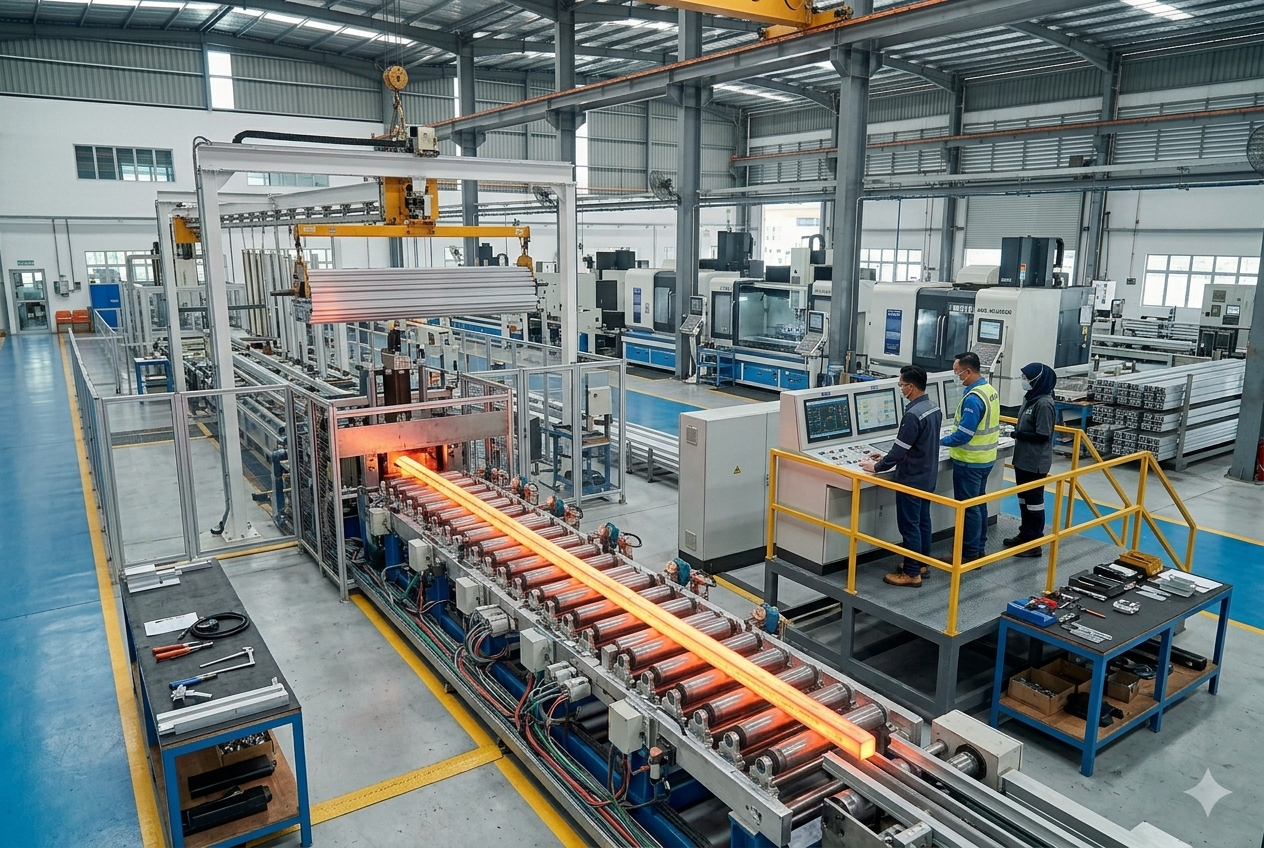
The process starts by heating aluminium billets to 400‑500 °C, depending on alloy. A hydraulic ram pushes the softened billet through the die, producing a long profile that is cut to length. Proper die design and maintenance prevent defects and ensure consistent output.
What are the key benefits of using aluminium extrusion moulds in manufacturing?
Using aluminium extrusion moulds delivers high production efficiency, excellent material utilisation, and the ability to create complex cross‑sections with consistent quality. Benefits include reduced machining waste, lower energy use versus casting, and the flexibility to produce long lengths that can be cut to size for diverse industrial applications.
- High production efficiency – continuous output reduces cycle time.
- Excellent material utilisation – minimal scrap compared to machining.
- Ability to produce complex cross‑sections – intricate shapes possible in one pass.
- Lower energy consumption – less energy than casting or forging.
- Flexibility in length – profiles can be cut to any required size.
How to design an effective aluminium extrusion mould for specific profiles?
Designing an effective aluminium extrusion mould begins with defining the profile geometry, required tolerances, and surface finish, then selecting suitable die material and incorporating cooling channels. Engineers employ flow‑simulation software to balance metal flow, minimise wear, and avoid defects such as surface lines or internal voids before finalising the die.
What factors influence die flow balance in extrusion mould design?
Die flow balance is governed by the land‑to‑orifice ratio, cavity symmetry, and the aluminium alloy’s viscosity at extrusion temperature. Uniform flow prevents defects such as piping, surface streaks, or uneven wall thickness, ensuring the extruded profile meets dimensional tolerances and mechanical property requirements.
- Land‑to‑orifice ratio – longer lands improve flow control but increase pressure.
- Cavity symmetry – asymmetrical cavities cause uneven metal distribution.
- Alloy viscosity – temperature‑dependent; higher viscosity requires larger orifice.
How does cooling channel design affect extrusion quality?
Cooling channel design controls how fast the extruded aluminium loses heat, influencing grain structure, hardness, and residual stresses. Properly sized and placed channels promote uniform cooling, reduce thermal distortion, and improve surface finish, while inadequate cooling can cause warping, internal stresses, or reduced mechanical performance.
- Channel size – larger channels remove heat faster but may cause thermal shock.
- Channel placement – uniform spacing avoids hot spots.
- Adjustable baffles/bubblers – fine‑tune cooling distribution along die length.
What materials and treatments are used for extrusion moulds to ensure durability?
Extrusion moulds are typically made from hot‑work tool steels such as H13 or specialised alloys like 420 stainless steel, chosen for hardness and resistance to thermal fatigue. Surface treatments — nitriding, chromium or PVD coatings (TiN, DLC), and proper heat‑treatment — enhance wear resistance and extend service life under high temperature and pressure.
- Hot‑work tool steels (H13, 420 stainless) – high hardness, thermal fatigue resistance.
- Nitriding – creates hard surface layer, reduces aluminium adhesion.
- Chromium plating – improves wear and corrosion resistance.
- PVD coatings (TiN, DLC) – low friction, high hardness, chemical inertness.
- Heat‑treatment (quenching & tempering) – achieves required core toughness.
Where can manufacturers in Selangor source high‑quality aluminium extrusion moulds?
Manufacturers in Selangor can obtain high‑quality aluminium extrusion moulds from local precision‑machining firms, specialised tooling suppliers, and established aluminium fabricators that provide in‑house die design, CNC machining, and heat‑treatment capabilities. One reliable option is Kamco Aluminium, which details its extrusion mould production and support on its services page.
- Lead time – inquire about typical turn‑around for standard vs. custom dies.
- Technical support – supplier should offer design assistance and troubleshooting.
- Prototype capability – request sample profiles before large orders.
- Facility visit – verify machining and heat‑treatment equipment.
What maintenance practices prolong the life of extrusion moulds?
To prolong extrusion mould life, manufacturers should regularly clean aluminium buildup, inspect for cracks or wear, and lubricate moving parts. Controlling extrusion temperature, avoiding excessive pressure, and storing dies in a dry, corrosion‑free environment also prevent premature failure and maintain consistent product quality.
- Cleaning – use appropriate solvents and non‑abrasive tools to remove residue.
- Inspection – visual and dye‑penetrant checks for surface cracks.
- Lubrication – apply high‑temperature grease to moving components.
- Temperature control – monitor billet and die temperatures during extrusion.
- Storage – keep dies in climate‑controlled, dry cabinets with corrosion inhibitors.
Frequently Asked Questions
What is the typical lead time for ordering a custom aluminium extrusion mould in Selangor?
Lead times usually range from 4 to 6 weeks, depending on design complexity and the supplier’s current workload. Simple standard profiles may be ready in as little as 2 weeks.
Can aluminium extrusion moulds be used for other metals besides aluminium?
While primarily designed for aluminium, certain moulds made from high‑grade tool steels can extrude softer metals like copper or brass with appropriate temperature adjustments. Using them for harder metals often requires specialised dies and is less common.
How does the cost of an extrusion mould compare to other tooling options?
An extrusion mould generally costs more upfront than a simple cutting tool but less than a full‑scale die‑casting tool, offering a cost‑effective middle ground for high‑volume profile production. Over long production runs, the per‑part cost drops significantly due to high efficiency and low waste.
What safety precautions should be taken when operating extrusion machinery?
Operators must wear heat‑resistant gloves, safety glasses, and hearing protection, and ensure that emergency stops are functional before starting the press. Regular training on lock‑out/tag‑out procedures and proper handling of hot billets is essential to prevent burns and mechanical injuries.
Are there environmental benefits to using aluminium extrusion moulds?
Yes, extrusion generates minimal scrap because the aluminium is shaped to near‑net size, reducing the need for secondary machining and lowering energy consumption per kilogram of product. Additionally, aluminium is highly recyclable, so off‑cuts and end‑of‑life profiles can be re‑melted with little loss of quality.